Emergency management careers
Emergency Management Specialist

Almost nobody's first job in this field is director. The emergency management specialist, and its near-twin the coordinator, is the post a degree actually opens: the person who writes the plan, books the exercise, chases the training records and takes a seat in the operations center when it activates. It is the job worth understanding properly, because it is the one you will be applying for.
What An Emergency Management Specialist Actually Does
Most of it is documents and rehearsal. An emergency management specialist maintains the plans a jurisdiction is legally required to hold and practically depends on: the emergency operations plan, hazard-specific annexes, continuity of operations, evacuation routing, shelter agreements. Plans go stale silently, so a large part of the job is noticing that a contact list is two years old or that a mutual aid agreement now names a department that has been reorganized.
The other half is exercises. You design a tabletop, you get the right people in the room, you run it, and then you write the after-action report that says what failed. That last document is the one that makes the job uncomfortable and useful, because it is where you tell agencies with more authority than you that their part did not work. Doing that well is a political skill as much as a technical one, which is why four of the seven courses in FEMA's Professional Development Series are about leadership, communication and decision making rather than about hazards.
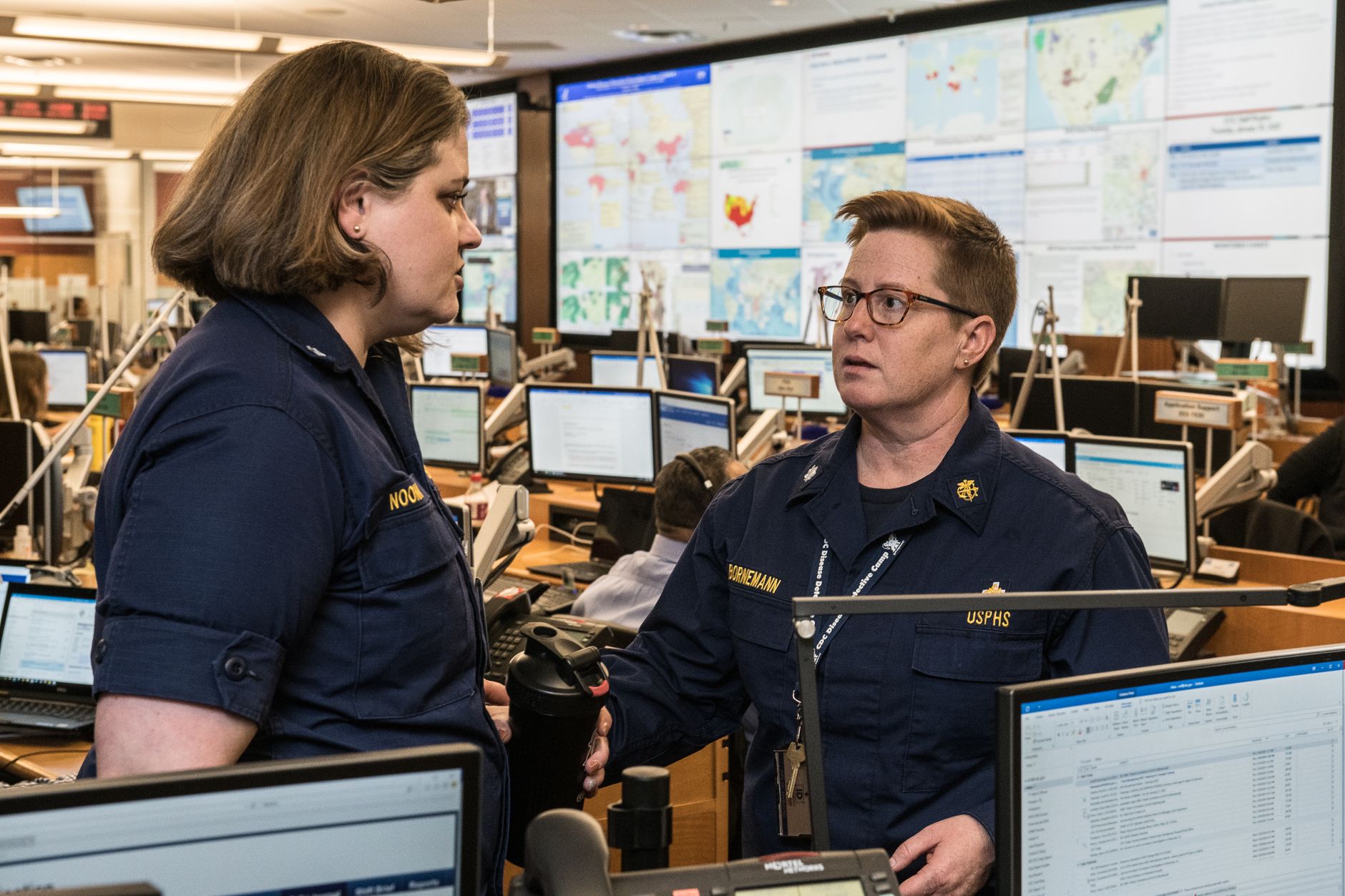
Then there is the activation, which is the part people imagine when they picture the field and the smallest part of the year. You staff a function in the emergency operations center, typically planning or logistics, working long shifts on a schedule someone else sets.
The Titles The Emergency Management Specialist Job Hides Behind
Searching for work in this field is harder than it should be because no two employers name the post the same way. O*NET records these titles for the one federal occupation, and a job search that only covers "specialist" will miss most of them.
- Emergency Management Coordinator
- Emergency Planner
- Emergency Preparedness Manager
- Emergency Services Program Coordinator
- 911 Communications Manager
- Public Safety Director
Add the sector-specific variants that sit outside government and the list grows again: emergency preparedness coordinator in a hospital system, business continuity analyst in a bank, crisis response specialist, training and exercise coordinator, disaster assistance specialist. Programs on this site name those among the destinations their graduates reach. Search on the work, not the word.
What An Emergency Management Specialist Earns, And The Honest Limit Of That Number
BLS does not publish a separate wage for specialists. It surveys one occupation, SOC 11-9161, and O*NET's reported titles for that occupation include coordinator, planner and preparedness manager alongside director. So the published spread does cover these roles, but it covers them mixed in with the job above them, and anyone quoting you a precise "emergency management specialist salary" has invented the precision.
| Percentile | Annual wage |
|---|---|
| 10th | $54,210 |
| 25th | $67,910 |
| Median | $93,330 |
| 75th | $126,490 |
| 90th | $166,430 |
What that table is good for is shape rather than a single number. The gap between the 10th and 90th percentile is wide for an occupation this small, and it is mostly explained by sector and geography rather than by seniority: federal posts and large metropolitan agencies at the top, small rural county offices at the bottom. The state-by-state figures are the ones to plan around, because where you work moves your pay more than what your business card says.
How Graduates Get A First Emergency Management Job
The field is small and the applications are not. What clears the pile is evidence you have done the work rather than only studied it, and the degree is where that evidence is cheapest to acquire.
- Get inside a real operations center during the degree. UCF places students in training exercises at live emergency operations centers through local government partnerships. MCNY runs internships with FEMA and the New York City Office of Emergency Management. Central Missouri requires a 150-hour practicum and runs a residency where students live at the Warrensburg Fire Department and go out on calls.
- Take the free FEMA coursework before anyone asks. The Professional Development Series is seven courses and costs nothing. It is the one credential in this field you can finish before you graduate.
- Pick up an operational certification alongside the degree where the program offers one. Central Missouri's partnership with the Johnson County Missouri Ambulance District lets certain undergraduate courses double as EMT certification requirements. FIU builds FEMA incident command and exercise evaluation certifications into coursework for students taking its in-person sections.
- Apply across sectors, not just to county offices. Hospital preparedness units, university emergency management departments, utilities and state agencies hire the same skills and often advertise where fewer emergency management graduates are looking.
- Be willing to move, at least once. This is the constraint nobody mentions: with 9 states reporting under 100 jobs in the whole occupation, the first post is usually somewhere you did not plan to live.
Where The Emergency Management Specialist Career Goes From There
The obvious path is upward inside the same office, to deputy and then to director, which is a slow route in an office of three people and a faster one if you are willing to change employers. The less obvious path is sideways into the private sector, where the same planning work is called business continuity, the credential of record is the CBCP rather than the CEM, and the employers are banks, hospital systems, utilities and logistics companies.
Both paths eventually run through a credential, and both credentials want documented years behind them. That is the argument for starting the clock early rather than adding a second degree: a specialist post plus the CEM's experience requirement moves you further in five years than more coursework will.
Three Things To Know Before Committing To Emergency Management
First, the writing load is real. If drafting an annex and editing an after-action report sounds worse than the response itself, this is the wrong job, and it is better to find that out now than after four years of tuition. Second, the hours are unpredictable by design: the events that justify the post arrive without notice and do not respect a roster. Third, the pay at entry is a public salary schedule in most cases, so the degree should be priced accordingly. In-state tuition across the ranked programs starts at $1,000 a year, and cheaper programs teach the same FEMA-derived material as expensive ones. Compare what they cost.
Common Questions About The Emergency Management Specialist Role
What does an emergency management specialist do?
What is the difference between an emergency management specialist and a director?
What qualifications do you need to be an emergency management specialist?
How much does an emergency management specialist earn?
Is emergency management specialist an entry-level job?
Can you become an emergency management specialist without a degree?
Sources On The Emergency Management Specialist Career
- Wage percentiles and employment: BLS Occupational Employment and Wage Statistics, May 2025, SOC 11-9161.
- Reported job titles and the education and experience requirement: O*NET, 11-9161.00.
- Free training: FEMA EMI Independent Study. Program detail: each school's own page, linked from its ranking card.